


InsightAce Analytic Pvt. Ltd. announces the release of a market assessment report on the “Global Recycled Cellulosic Fibers & Textile-to-Textile Circularity Market Size, Share & Trends Analysis Report By Feedstock Source (Post-consumer cotton textiles, Post-consumer viscose & MMCF garments, Industrial textile waste (cutting & spinning scraps), Cotton-rich blended textiles (polycotton), Agricultural cellulose residues (straw, bagasse, bamboo), Paper & packaging cellulose waste), By Recycling Technology (Mechanical Recycling, Chemical Recycling & Regenera¬tion, Hybrid Recycling Systems), By Output Material (Recycled dissolving pulp, Regene¬rated cellulosic staple fibers, Recycled viscose fibers, Recycled lyocell fibers, Reprocessed modal fibers, Recycled cellulose yarn inputs), By Fiber Type Produced (Viscose rayon, Lyocell, Modal, Cupro, Cellulose acetate, Cotton-like regenerated staple fibers), By Waste Stream Composition (100% cotton textiles, Cotton-polyester blends, Cotton-viscose blends, Dyed & colored textile waste, Contaminated textile streams (finishes/elastane)), By Circularity Model (Textile-to-pulp-to-fiber recycling, Direct fiber-to-fiber regeneration, Blend separation & cellulose recovery systems), By Application (Apparel & Fashion, Home & Interior Textiles, Nonwoven & Industrial Uses),-Market Outlook And Industry Analysis 2035″

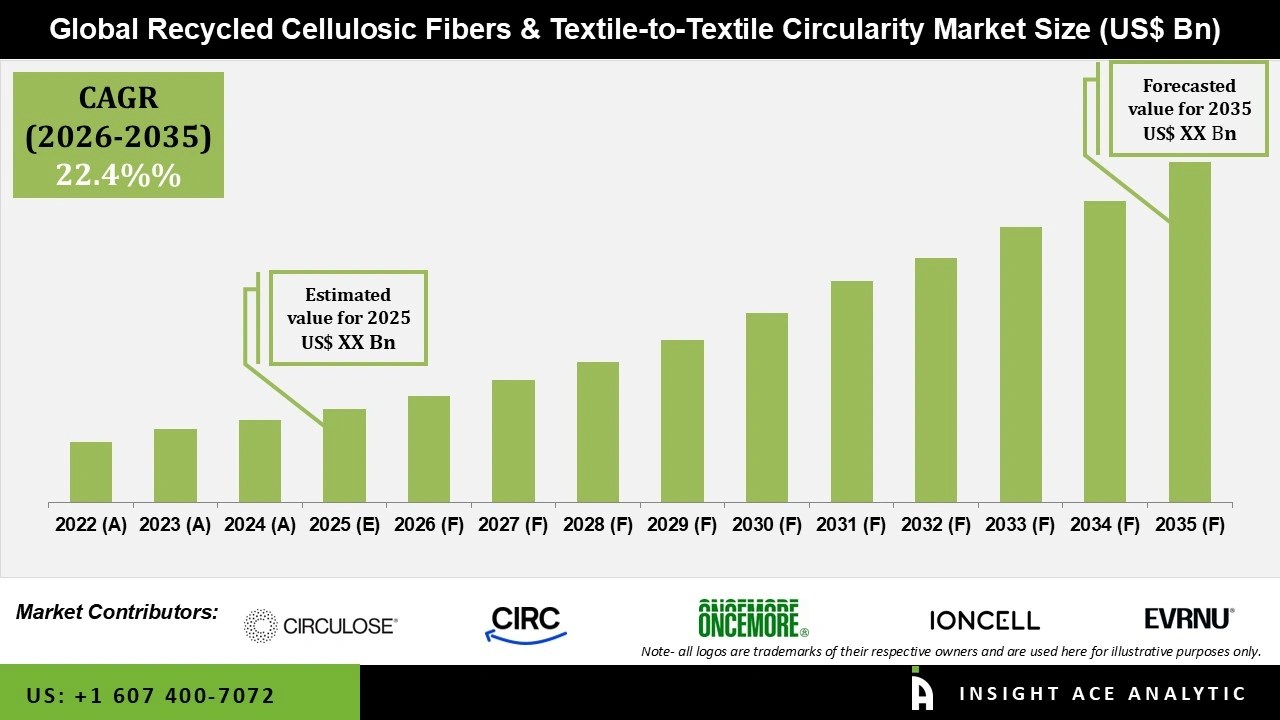
Recycled Cellulosic Fibers and Textile-to-Textile Circularity Market Size is predicted to grow at a 22.4% CAGR during the forecast period for 2026 to 2035.
Get Free Access to Demo Report, Excel Pivot and ToC: https://www.insightaceanalytic.com/request-sample/3476
The recycled cellulosic fibers and textile-to-textile circularity market represents a significant shift in the textile industry toward sustainable, closed-loop production models. Recycled cellulosic fibers are produced through the reprocessing of cellulose-rich waste streams, including post-consumer cotton textiles, viscose and other man-made cellulosic fiber (MMCF) products, industrial textile waste, cotton blends, agricultural residues such as straw, bagasse, and bamboo, as well as paper-derived cellulose sources.
Textile-to-textile circularity refers to the systematic collection, sorting, and conversion of end-of-life garments into new fibers and fabrics, with the objective of reducing dependence on virgin raw materials and minimizing landfill disposal. The market includes mechanical recycling, chemical recycling and regeneration processes, as well as hybrid technologies, with chemical recycling gaining increasing traction due to its ability to generate high-quality regenerated fibers comparable to virgin-grade materials.
These fibers are extensively used in apparel manufacturing, fashion, technical textiles, and nonwoven applications, driven by properties such as softness, breathability, biodegradability, and a comparatively lower environmental footprint versus conventional fiber alternatives. Market expansion is being supported by rising environmental awareness, increasing volumes of textile waste, strong environmental, social, and governance (ESG) commitments within the global fashion industry, supportive regulatory frameworks, and ongoing advancements in recycling technologies.
However, the market continues to face several constraints, including high processing costs, technical complexities associated with recycling blended and composite materials, insufficient collection and sorting infrastructure, and variability in the availability and quality of recyclable feedstock. These challenges collectively limit the scalability and widespread commercialization of recycled cellulosic fiber and textile circularity solutions.
Read Comprehensive Report Overview: https://www.insightaceanalytic.com/report/recycled-cellulosic-fibers-and-textile-to-textile-circularity-market/3476
List of Prominent Players in the Recycled Cellulosic Fibers & Textile-to-Textile Circularity Market:
- Circulose (formerly Renewcell)
- Circ
- Södra (OnceMore®)
- Ioncell (Aalto University consortium)
- Infinited Fiber Company
- Evrnu
- Spinnova
- TreeToTextile
- Tyton BioSciences
- Lenzing Group
- Birla Cellulose (Aditya Birla Group)
- Sateri
- Tangshan Sanyou Chemical Fiber
- Yibin Grace
- Worn Again Technologies
- Ambercycle
- Re&Up
- Reju
- Recover Textile Systems
- Procotex
- Hilaturas Ferre
- Filature du Parc
- TextileGenesis
- Pellenc ST
- Valvan Baling Systems
- Picvisa
Market Dynamics
Drivers:
The recycled cellulosic fibers and textile-to-textile circularity market is being driven by increasing awareness of the environmental impact associated with textile waste, resource-intensive fiber production, and carbon emissions, which is accelerating the shift toward sustainable alternatives. Supportive regulatory measures, including recycling mandates and Extended Producer Responsibility (EPR) frameworks, are further promoting the adoption of circular textile systems. In parallel, leading global fashion brands are increasingly aligning their strategies with environmental, social, and governance (ESG) commitments and net-zero targets, thereby strengthening demand for products incorporating recycled fibers.
Ongoing technological advancements in chemical recycling and fiber regeneration are improving product quality, consistency, and performance, making recycled fibers more competitive with virgin materials. Additionally, the continuous generation of post-consumer textile waste, driven largely by fast fashion consumption patterns, ensures a stable and expanding feedstock supply for recycling processes.
Challenges:
Despite positive growth prospects, the market is constrained by several structural and operational challenges. High capital expenditure and operating costs associated with advanced recycling technologies, particularly chemical recycling and regeneration processes, remain significant barriers to entry. Technical limitations in efficiently processing blended textiles, such as polycotton materials, along with challenges in removing dyes and contaminants without degrading fiber quality, continue to restrict scalability.
Furthermore, inadequate infrastructure for textile collection, sorting, and segregation in many regions limits the availability of consistent, high-quality raw materials. Additional constraints include strong price competition from low-cost virgin fibers, the lack of standardized recycling systems, and the limited presence of large-scale commercial recycling facilities, all of which collectively hinder broader market adoption.
Regional Trends:
Asia-Pacific remains the dominant region in the recycled cellulosic fibers and textile-to-textile circularity market, supported by its substantial share of global textile and apparel manufacturing, well-established capacity for man-made cellulosic fiber production, and cost-efficient industrial ecosystem. The region generates significant volumes of textile waste while simultaneously demonstrating strong demand for sustainable fiber alternatives, facilitating integration of recycling solutions into existing supply chains.
Key manufacturing hubs such as China, India, Bangladesh, and Vietnam play a central role in large-scale fiber production and regeneration activities. In addition, the presence of established fiber manufacturers, increasing investment in circular economy technologies, supportive waste management policies, and a strong export-oriented apparel sector collectively reinforce Asia-Pacific’s leadership in this market.
Add our site to Google Preferred Sources for quality content: https://google.com/preferences/source?q=insightaceanalytic.com
Key Development
- December 2025: Birla Cellulose launched Liva Reviva M, a mechanically recycled circular fibre that converted textile waste into scalable, high-quality material. It integrated textile-to-textile recycling into mainstream cellulosic fibres, transforming blended post-consumer waste into products like denim and home textiles without extra water or chemicals, while overcoming scale and uniformity challenges.
Segmentation of Recycled Cellulosic Fibers & Textile-to-Textile Circularity Market-
By Feedstock Source –
- Post-consumer cotton textiles
- Post-consumer viscose & MMCF garments
- Industrial textile waste (cutting & spinning scraps)
- Cotton-rich blended textiles (polycotton)
- Agricultural cellulose residues (straw, bagasse, bamboo)
- Paper & packaging cellulose waste
By Recycling Technology –
- Mechanical Recycling
- Fiber shredding & re-spinning
- Mechanical cotton regeneration
- Mechanical pulp processing
- Chemical Recycling & Regenera¬tion
- Textile-to-dissolving pulp conversion
- Viscose regeneration process
- Lyocell solvent-based recycling
- Ionic liquid cellulose dissolution
- Carbamate & advanced solvent recycling
- Hybrid Recycling Systems
- Mechanical + chemical purification
- Blend separation & cellulose recovery
- Textile-to-pulp MMCF integration
By Output Material –
- Recycled dissolving pulp
- Regene¬rated cellulosic staple fibers
- Recycled viscose fibers
- Recycled lyocell fibers
- Reprocessed modal fibers
- Recycled cellulose yarn inputs
By Fiber Type Produced –
- Viscose rayon
- Lyocell
- Modal
- Cupro
- Cellulose acetate
- Cotton-like regenerated staple fibers
By Waste Stream Composition –
- 100% cotton textiles
- Cotton-polyester blends
- Cotton-viscose blends
- Dyed & colored textile waste
- Contaminated textile streams (finishes/elastane)
By Circularity Model –
- Textile-to-pulp-to-fiber recycling
- Direct fiber-to-fiber regeneration
- Blend separation & cellulose recovery systems
By Application –
- Apparel & Fashion
- Everyday wear & basics
- Denim & cotton replacements
- Premium fashion textiles
- Performance & activewear
- Home & Interior Textiles
- Bedding & linens
- Upholstery fabrics
- Curtains & furnishings
- Nonwoven & Industrial Uses
- Hygiene & medical textiles
- Wipes & filtration materials
- Automotive & technical textiles
By Region-
North America-
- The US
- Canada
Europe-
- Germany
- The UK
- France
- Italy
- Spain
- Rest of Europe
Asia-Pacific-
- China
- Japan
- India
- South Korea
- South East Asia
- Rest of Asia Pacific
Latin America-
- Brazil
- Argentina
- Mexico
- Rest of Latin America
Middle East & Africa-
- GCC Countries
- South Africa
- Rest of Middle East and Africa
Customize this Study according to your Requirements @ https://www.insightaceanalytic.com/customization/3476
About Us:
InsightAce Analytic is a market research and consulting firm that enables clients to make strategic decisions. Our qualitative and quantitative market intelligence solutions inform the need for market and competitive intelligence to expand businesses. We help clients gain competitive advantage by identifying untapped markets, exploring new and competing technologies, segmenting potential markets and repositioning products. Our expertise is in providing syndicated and custom market intelligence reports with an in-depth analysis with key market insights in a timely and cost-effective manner.
Contact us:
InsightAce Analytic Pvt. Ltd.
Visit: https://www.insightaceanalytic.com/
Tel : +1 607 400-7072
Asia: +91 79 72967118
info@insightaceanalytic.com