


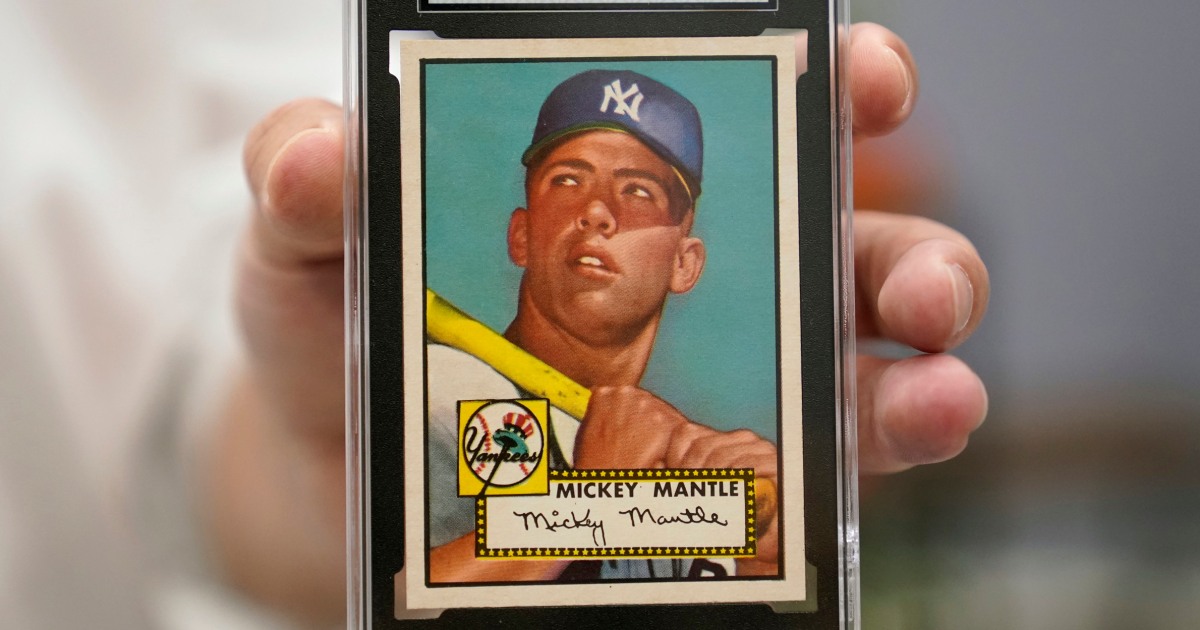
In the sports collectibles world, cardboard is still king — for now.


Despite the boom and subsequent semi-bust of digital sports collectibles in the past couple of years, the world of tangible sports collectibles — cards, jerseys, memorabilia and all things in between — has remained hot. The record for most ever paid for sports memorabilia has been broken three times this year, though prices for some popular cards have dipped from their peaks in 2020 and 2021.
That market has been boosted by a thriving online content industry surrounding sports cards and memorabilia. Dozens of YouTube channels, podcasts and TikTok accounts track the market, with some offering a way for people to purchase cards, jerseys and even autographed football helmets.
That’s fueled some optimism that NFTs, or non-fungible tokens (blockchain-based tokens tied to digital art) aren’t set to replace the thrill of opening a pack of cards anytime soon.
“I would say the future is 100% tangible,” said Mike Heffner, CEO of Lelands, a sports auction house that approaches $50 million in revenue a year. “With an NFT, I don’t understand it; I just don’t see how that can bring the same thrill to someone.”
Sports NFTs did have their moment. Sales soared during the pandemic, and Deloitte Global projected that they would generate $2 billion in U.S. transactions this year, almost double that of 2021. But amid a crypto winter, the future trajectory of the sports memorabilia market, tangible or NFT, is being disputed.

Heffner said his company has attempted a couple of NFT deals that didn’t work out and now exclusively does tangible item auctions. He doesn’t plan to head into the NFT space anytime soon.
The trading card resurgence quickly built upon itself at the start of the pandemic. With live sports stalled, many restless sports fans nostalgically…