


First came the mariachi band, a flame-juggling dancer and the models in bathing suits and ball gowns sauntering beside the pool of a Miami mansion.
Then the spectacle began.


A businessman who built his wealth on waves of speculation — riding the dot-com surge in the 1990s, and then the rapid growth of Bitcoin in recent years — popped a drawing out of its frame that he heralded as a page from Frida Kahlo’s personal diary.
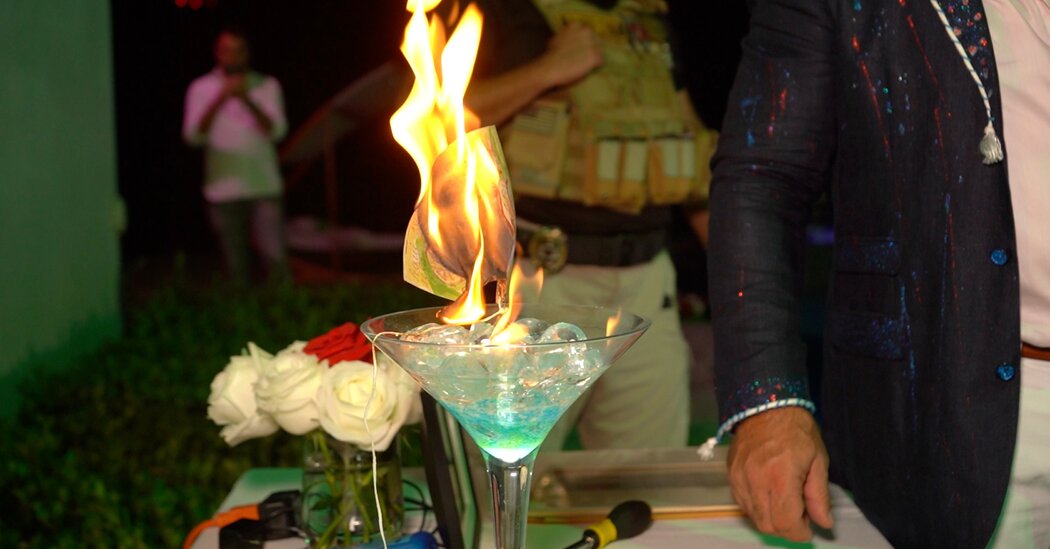
Wearing a sequined blazer with the artist’s portrait on his back, he pinned the picture to a martini glass filled with blue rubbing alcohol. It was set aflame, and the artwork was reduced to ashes.
Attendees at the opulent July gathering, which was captured in a promotional video, had been notified that the drawing was being “transformed to live eternally in the digital realm” through the creation of nonfungible tokens that represented the “rebirth & immortality of a timeless piece.” Those who chose to buy an NFT with the Ethereum cryptocurrency were promised exclusive access to events and the assurance that 30 percent of the proceeds would go toward charitable causes.
But with his entrance into the murky world of NFTs, the businessman, Martin Mobarak, also generated incredulous headlines and an investigation by the authorities in Mexico, which classifies Kahlo’s artworks as national monuments. Some observers doubted that a relatively unknown collector would have access to a rare Kahlo drawing, leading to accusations of fraud.
The destruction of “Fantasmones Siniestros” (“Sinister Ghosts”) was an example of the high-stakes brinkmanship common in the NFT market, where a 97 percent drop in trading volumes is pushing some to extremes. Selling cryptocurrencies and blockchain assets has often relied on hype cycles, and Mobarak acknowledged he was looking to stir controversy.
“I had to do something drastic to get attention,” he said in an extensive interview about the project, which went under the radar until Mexico announced…