



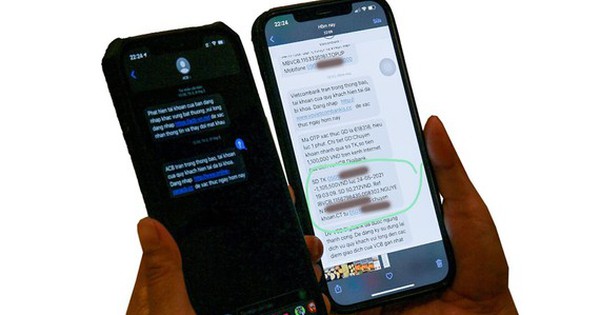
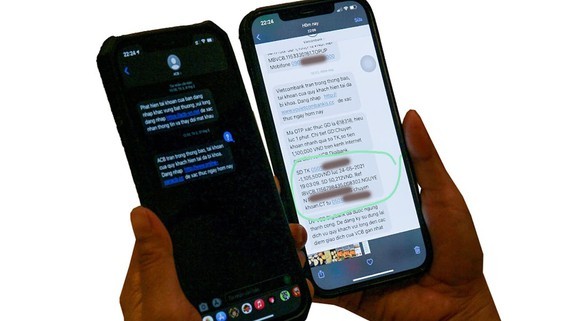
 Mobile phone users are sharing fake SMS with friends for warning purposes. (Photo: SGGP)
According to Vice President of Bkav Ngo Tuan Anh, it is quite easy to establish a virtual call center using either a domestic or foreign number with a reasonable price. It is also simple and convenient to acquire a telecoms package via a Voice-over-Internet-Protocol service (VoIP) for scamming purposes, which is then hard for state officials to track criminal activities.


There are now two popular methods to scam people: using similar hotlines to those of famous companies and sending Brandname SMS. The former can easily trick careless users while the latter is more complicated to apply. Criminals have to use illegal hardware and software sold from other nations to simulate a base transceiver station in order to send fake messages to mobile phone users. They can also hire an SMS Fake Sender ID service for this task.
“In the Industry 4.0 era, criminals even exploit Blockchain technology for fraudulent Initial Coin Offering (ICO), which is originally used to attract capital from the cryptocurrency community to develop certain projects based on the Blockchain technology. In this kind of scam, a certain individual first introduces new cryptocurrency tokens and spreads the news of its strong growth in the future, suggesting that people should buy the tokens and sell them later for profit. This information is not true, and buyers lose a large amount of money”, said CEO of Vbee Ho Minh Duc.
Another infamous type of fraudulence is to meddle with weak official mobile networks to collect OTP modes in bank-related services. Despite not being very common, it has appeared in Vietnam lately, used by skillful hackers without the awareness of both network service providers and banks themselves. Only when a customer contacts a bank to report problems does a bank discover this trick.
The Authority of Information Security under the Ministry of Information and Communications has…