



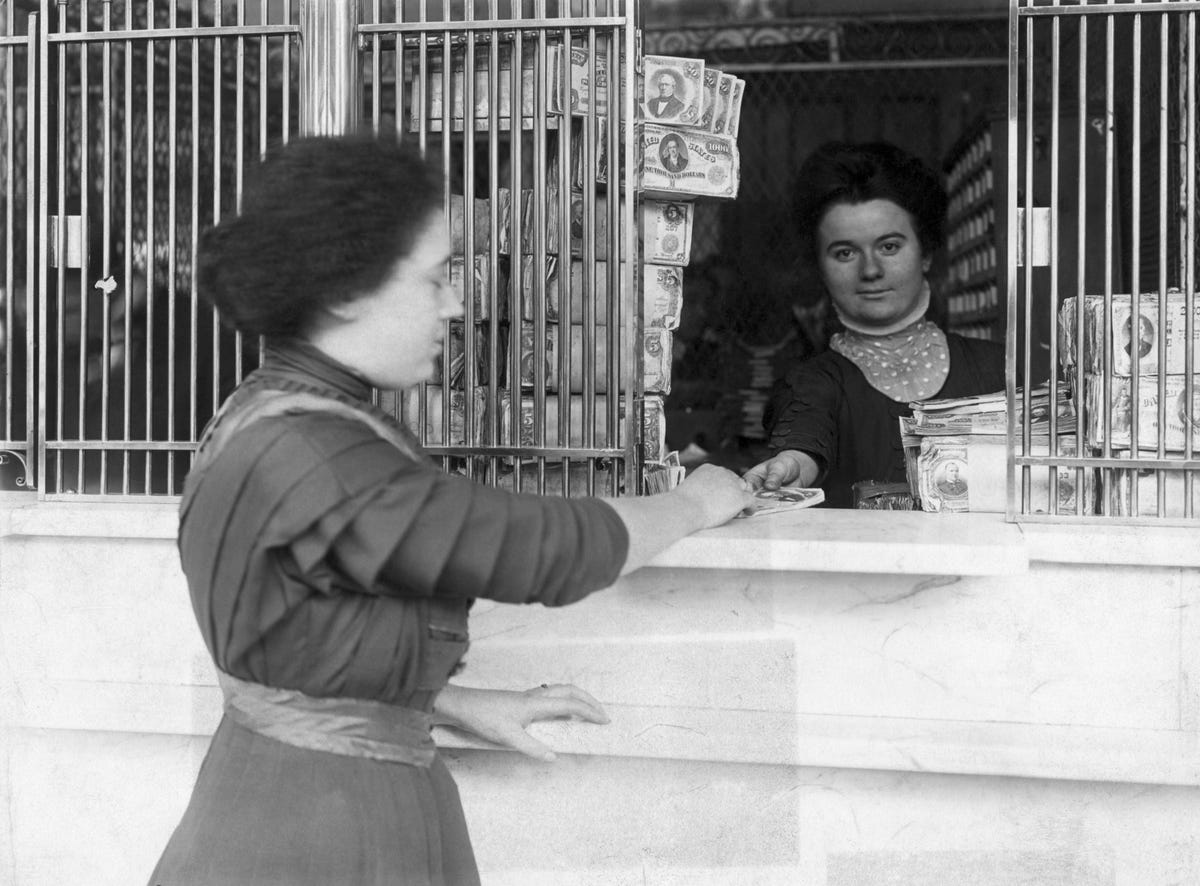
The only woman bank cashier in America, or possibly in the world. Photograph, 1890.


Bettmann Archive
The very first female U.S. senator was sworn in on November 12, 1922, representing the state of Georgia. Her name was Rebecca Felton. She was 87 years old at the time. Her tenure lasted one day.
Hers was a token appointment to placate new women voters when the sitting senator died unexpectedly. The special election was expected to produce a new senator before congress was back from recess. When Walter F. George won the special election, he allowed Fenton to be sworn in for one day to appease his female constituents.
Fenton, a prominent suffragette and unfortunately virulent white supremacist — history is always unkind to those on its wrong side — called out southern men for doing little for women’s rights, writing that “honeyed phrases are pleasant to listen to, but the sensible women of our country would prefer more substantial gifts.” It had been just a little over twenty years since married women were allowed to open their own bank accounts, and own their own land. And yet, few did.
Even in the 1970s, fifty years later, married women in the United States could not universally open bank accounts or apply for credit cards without first procuring their husbands’ permission. And women couldn’t obtain a loan without a male co-signer.
Between the years 1971 to 1976, Ruth Bader Ginsburg argued a number of cases that empowered women’s rights under the Equal Protection Clause of the Constitution that set precedence for women’s financial freedoms today.
Ginsburg’s work paved the way for the Equal Credit Opportunity Act of 1974 which prohibited “discrimination on the basis of race, color, religion, national origin, sex, marital status, or age in credit transactions.”
47 years later, we are in a new era in which financial transactions are no longer gender-discriminatory. And thanks to DeFi and…