




Tevarak/iStock via Getty Images


In hindsight, the laser eyes were Bitcoin’s (BTC-USD) top signal.
Laser eyes top (Google Trends)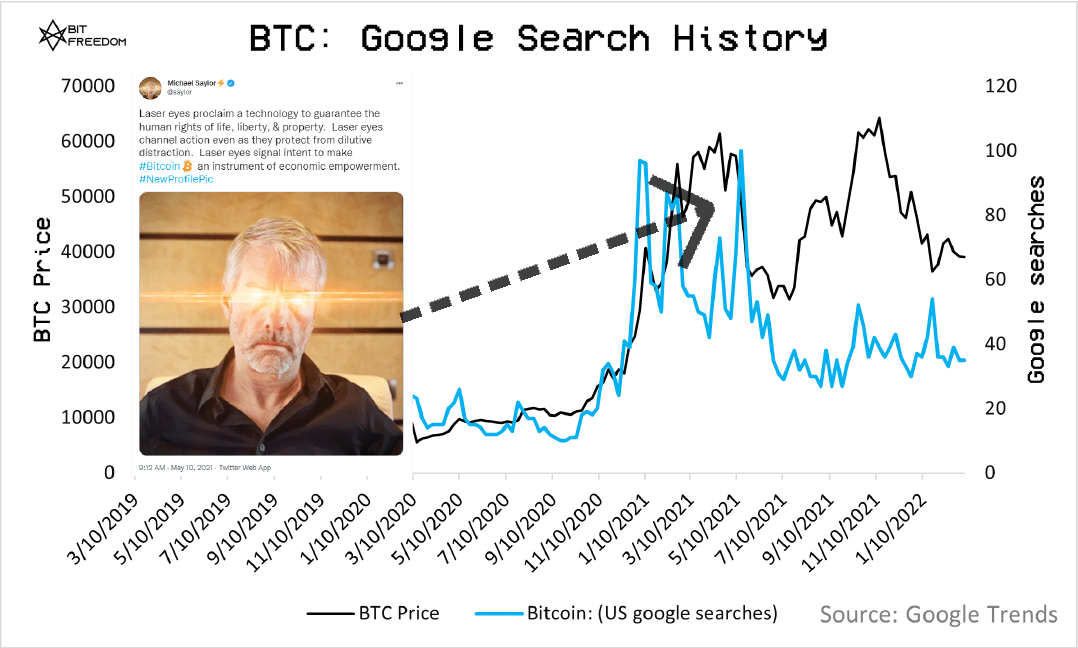
Bitcoin is still young and competing against multi-century monetary premiums held by gold (GLD), bonds, and fiat currencies. As a result, Bitcoin is currently more correlated to the NASDAQ (QQQ) than it is to gold.
For Bitcoin to increase or maintain stability in an uncertain market, investors need to shift to view Bitcoin as a hard asset rather than a speculative investment.
At present, the beginning of this sentiment shift is creating demand for Bitcoin. However, this demand has not been enough to outpace sell pressure from allocators who view Bitcoin as risk-on.
Price Cycle Theory
The outlook for traditional markets looks bearish, and Bitcoin has room to move lower. How much lower depends on the extent to which equity and credit markets unwind and commodities peak, along with monetary policy decisions by global governments.
The chart below displays Bitcoin’s Elliott waves and logarithmic growth curves, as well as a fractal projection taken from Bitcoin’s price movements throughout 2020:
Bitcoin logarithmic growth curves (TradingView)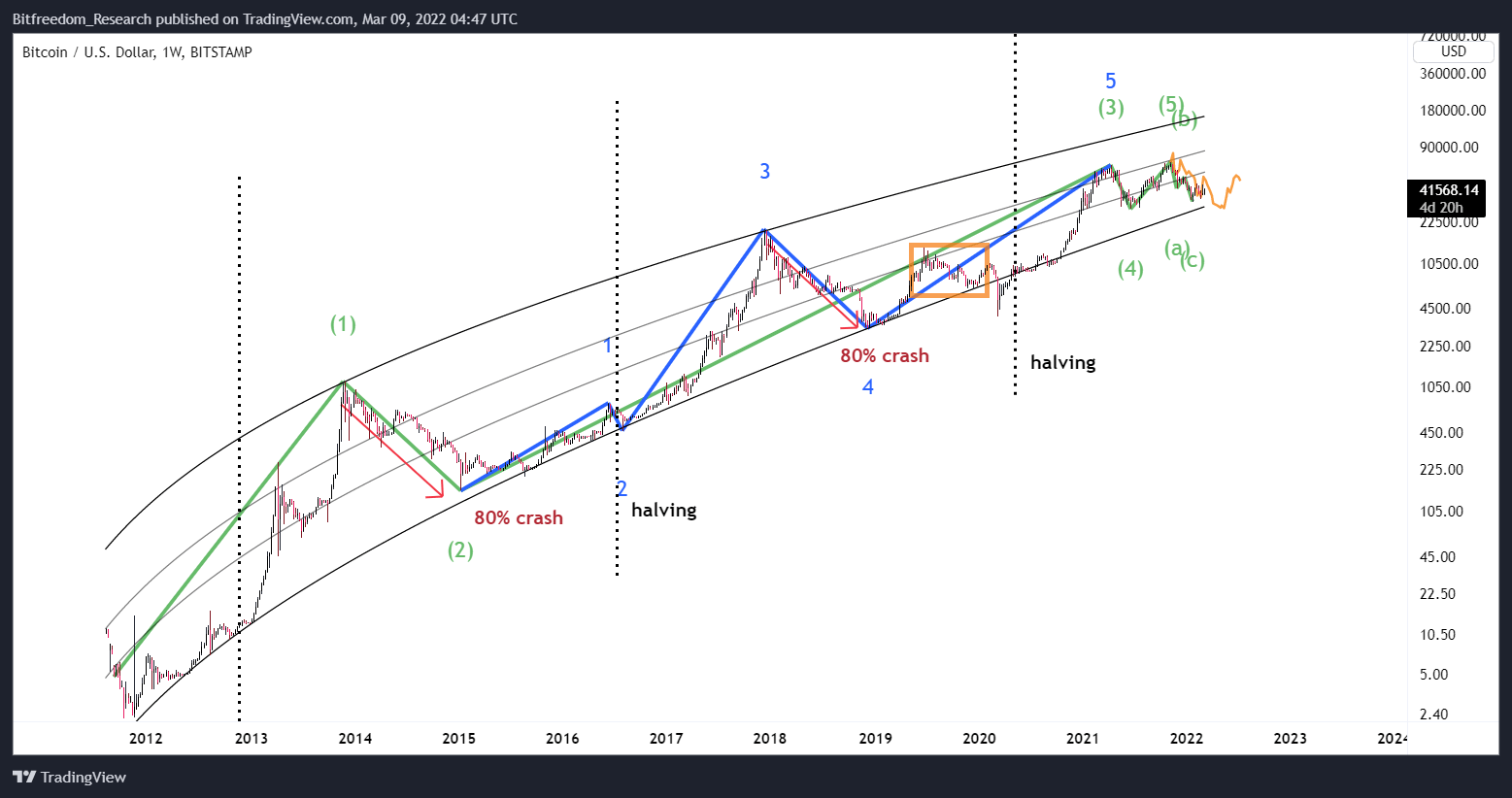
Given the similar high-fear economic environments, it seems likely that Bitcoin will follow its 2020 movement and accumulate in the 30Ks until anxiety settles.
Additionally, this accumulation movement would line up with Bitcoin’s price cycle theory. In accordance with Bitcoin cycles, halving events routinely lead to parabolic highs, then 80% crashes.
Notably, now that Bitcoin is an over $700 Billion asset, it seems that 50% cycle crashes have replaced the previously standard 80% crash.
Short term TA shows Bitcoin is poised for a relief rally; however, in the long term. Bitcoin needs more time to accumulate near its bottom logarithmic growth curve. As we can see in the chart above, this curve has served as Bitcoin’s price floor in previous bear markets.
Reflexive Rally
Bitcoin’s move from November…