



- Block partnered with Wakefield Research to address misconceptions surrounding Bitcoin.
- The survey included 9,500 respondents from varying age groups, genders and ethnicities from around the world.
- The data reveals something telling about the knowledge gaps in Bitcoin and what strengthens the network effect.
Block, a Bitcoin-oriented financial services firm previously known as Square, just released Bitcoin: Knowledge and Perception, a report detailing a survey of 9,500 participants conducted in partnership with Wakefield Research to address common misconceptions about Bitcoin.
One immediately noticeable trend uncovered in the survey addresses a simple question. Why should someone buy bitcoin?
One of the most common conceptions involving bitcoin is people just want to invest in it to make money. Block’s report states:
“People with below-average income more frequently note using bitcoin as a way to send money and buy goods and services than people with above-average incomes,” as noted in the graph below.
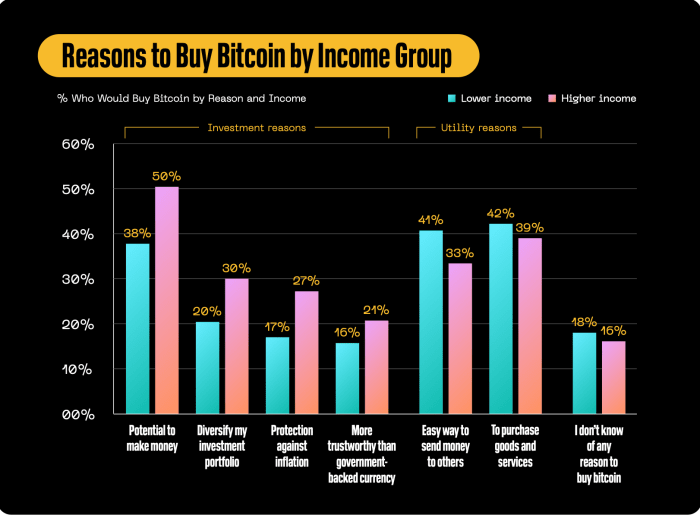
While 50% of higher income respondents cite the potential to make money as their reason for purchasing bitcoin, over 40% of low-income respondents prefer to use it to purchase goods and send money to others.
The survey also found that knowledge of cryptocurrency largely dictates whether or not investors are interested in purchasing bitcoin. Over 40% of respondents who claimed a “fair to expert knowledge” level in the space noted they would likely purchase bitcoin within the next year showing a large amount of optimism.
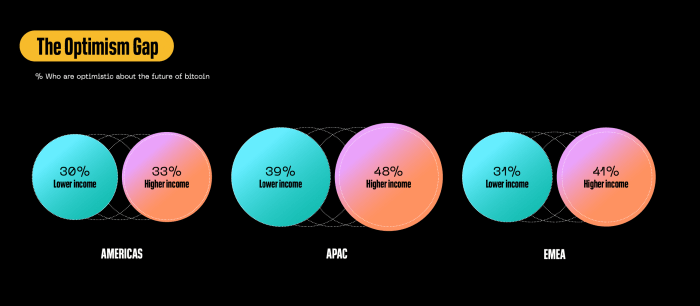
“Interestingly, though, the optimism gap between high- and low-income respondents is the smallest in the Americas, and that optimism gap disappears completely if you remove those who say they don’t know anything about cryptocurrencies.” – Block

“However, nearly a quarter of those who rate their knowledge of cryptocurrencies as ‘fair to expert’ remain skeptical of bitcoin’s future,” said the report.
Meanwhile, the…