




Phira Phonruewiangphing/iStock Editorial via Getty Images


Although it’s been around for over a decade, Bitcoin (BTC-USD) has surged in popularity over the last few years. Slowly, more and more investors have entered the asset class after seeing its strong returns since the bubble popped in 2018. Despite these strong returns, Bitcoin is still in its early stages of adoption. Like other emerging industries, many different factors can affect volatility and performance. Below are the major trends that will affect the world’s most popular cryptocurrency in 2022.
CBDCs
For years, central banks have discussed developing their own digital currency as a means for faster, cheaper, and more secure transactions. While many countries are still in the development phase, a few have recently launched their CBDC. Most notably, China has been testing its digital yuan in select cities and is allowing foreigners to use it for the first time during the Olympic Games. Up to this point, China has struggled to drive adoption for its CBDC, with the digital yuan making up less than one percent of transactions in the country. However, these statistics are based on the testing phase, and currently, only select merchants accept it as payment. While limited use cases and privacy concerns are constraining the project’s success, we expect that to change as China continues to roll it out nationwide.
India announced this week that it will launch its digital rupee by April 2023, giving another one of the world’s largest economies a timeline for rollout. On the flip side, the U.S. is taking its time in deciding whether a digital dollar is the right move. The U.S. is the largest country still in the research phase of the CBDC project, while all other large economies are in the development or pilot phase.
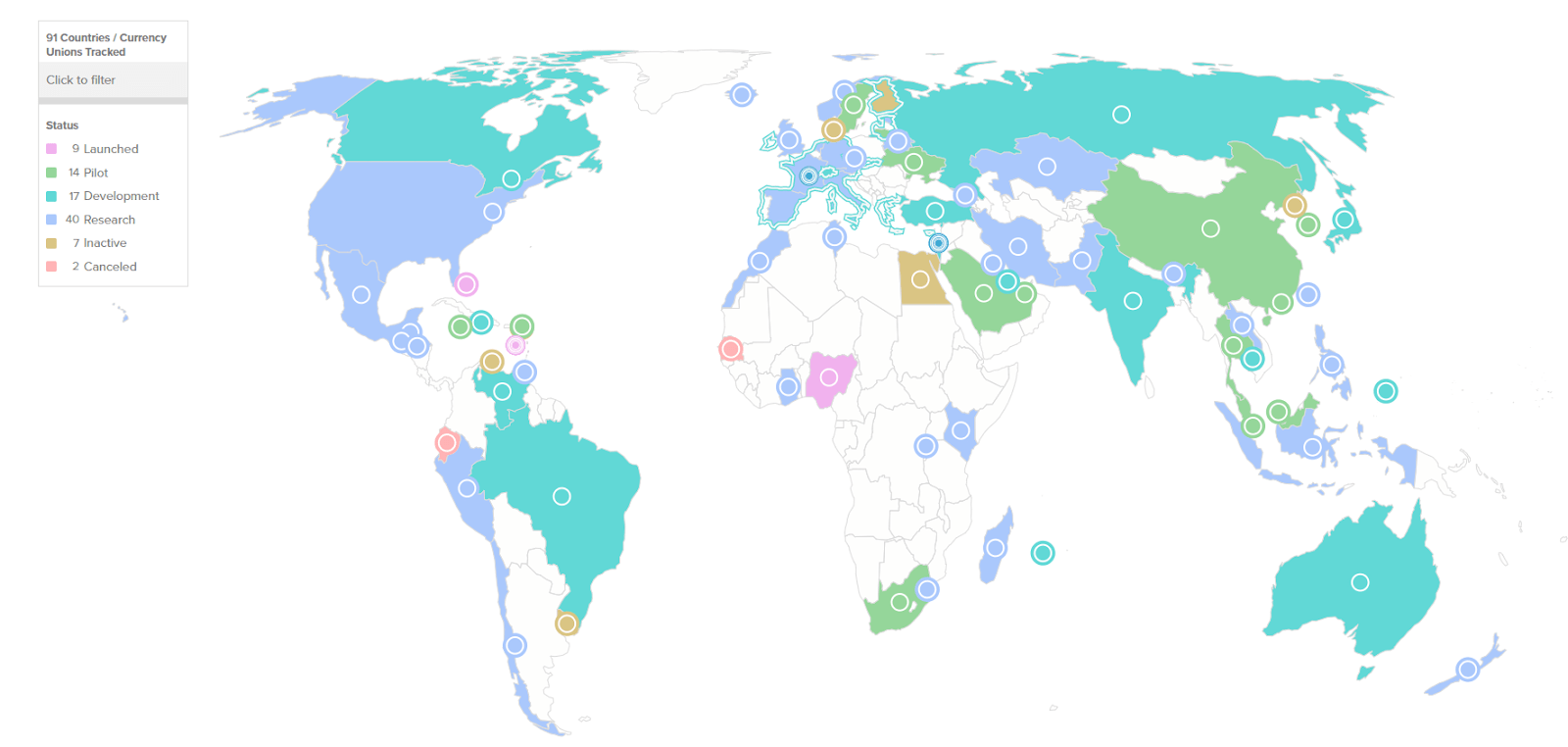
Atlantic Council
Source: Atlantic Council
Many are worried that a digital dollar will give the government more control, allowing it to track all transactions in real-time. In the U.S….