



Momentum strategies don’t appear to work with bitcoin
BTCUSD,
The past couple of weeks provide a good illustration of why. From an Oct. 19 high of almost $67,000, bitcoin fell $9,000 over the next eight days to just above $58,000 — indicating that the short-term trend was most definitely down. But, far from that trend continuing, bitcoin turned back up and over the next 12 days completely erased that decline.


The same reversal tendency appears to be the case with longer-term trends. In the early months of this year bitcoin more than doubled, for example, rising from its year-end 2020 price of $29,000 to more than $63,000 in April. That trend then reversed itself, and over the subsequent three months bitcoin erased all of its year-to-date gain. But then, in July, the trend reversed again, and by October bitcoin was trading at a new all-time high.
Such trend reversals wreak havoc with the portfolios of trend-following systems. Because trend-following bitcoin traders are buying high and selling low, many have been losing money even while bitcoin itself is skyrocketing. The investment implication: If you want to invest in bitcoin, you should buy and hold. Or better yet, “buy and HODL.”
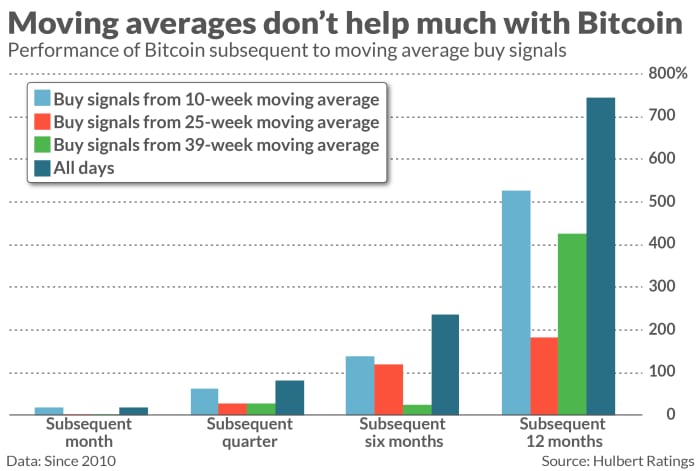
The trend reversals bitcoin has experienced this year, while breathtaking, are not unique, based on my analysis of the cryptocurrency’s price history since 2010. To determine if trend following with bitcoin holds promise, I calculated the performance of moving average systems of different lengths — 10-weeks, 25-weeks,and 39-weeks. Notice from the chart below that, regardless of the moving average length, bitcoin performed more poorly in the wake of a buy signal than it did the rest of the time.
…