




Opinions expressed by Entrepreneur contributors are their own.


Cryptocurrency’s failure isn’t just its plummeting financial losses over the last year but also the devastating effects the digital currency has had on our planet.
Why is it bad for the environment? Very simply, the amount of energy needed to power crypto puts millions of metric tons of carbon into the air. The worst cryptocurrency of them all is Bitcoin, the original form of crypto and the largest.
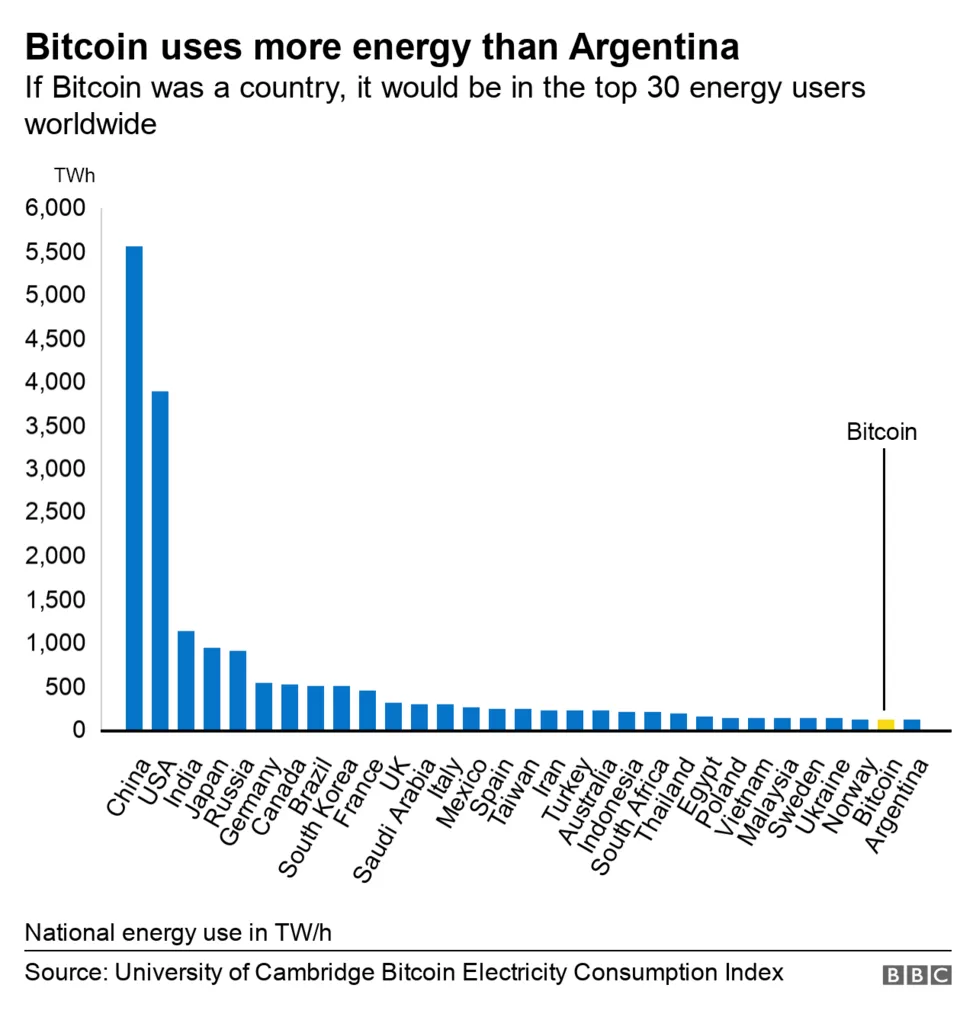
To put some figures into perspective, each Bitcoin transaction currently utilizes 1201.34 kWh of electricity. This is equivalent to an average US household’s power consumption over 41.8 days. When you look at the figures of energy required for Bitcoin mining across the last twelve months, it is more than the amount of power Argentina has consumed within a year, according to a study by The Cambridge Centre for Alternative Finance.
The mining problem
The root of crypto’s eco-damage stems from Bitcoin mining—but it’s not the type of mining you think. Mining for fossil fuels involves heavy machinery, digging, lots of physical labor, and logistics. Bitcoin mining is as simple as switching on a computer server.
The ease of accessibility can turn any mortal into a miner within minutes (and a few complex processing servers that cost thousands of dollars each).
Related: How a Savvy Entrepreneur Built the First Home Heater That Mines Bitcoin
The decentralized currency relies on its community competing to solve complex mathematical equations using a large network of computer servers. Each server is battling it out to come up first with the solution, yet there can only be one winner. It’s a race against time, with the server’s owner being rewarded in Bitcoin for each correct answer.
But the overall effect of this mining on carbon emissions is tremendous. According to reports, the production of Bitcoin emits nearly half a ton of carbon dioxide during every transaction. This sheer volume of emissions alone…